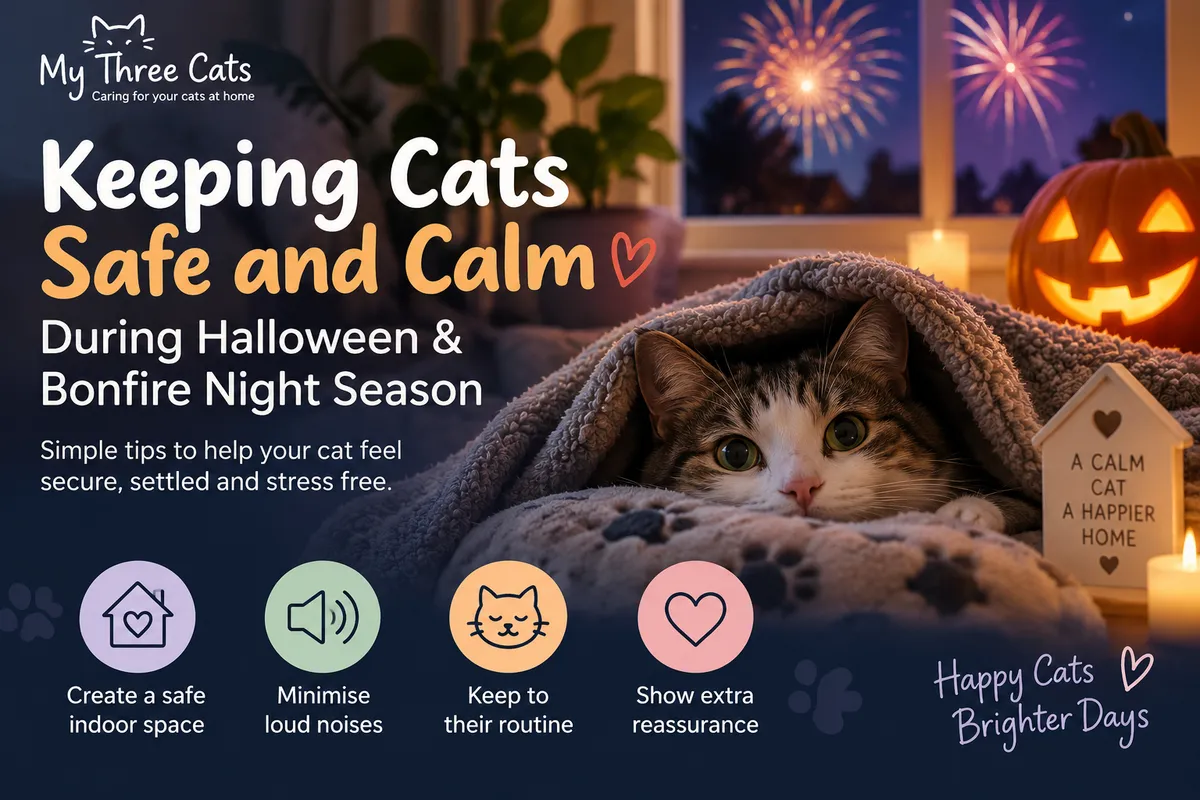
Keeping Cats Safe and Calm During Halloween & Bonfire Night Season
Keeping Cats Safe and Calm During Halloween & Bonfire Night Season
For our furry friends, late October through early-to-mid November can be of the trickiest stretches of the year. Halloween on the 31st runs straight into Bonfire Night on the 5th, and fireworks displays — official and unofficial — often carry on for days either side of both. For a cat, that's weeks of unpredictable bangs, strange smells, and strangers at the door. I thought it may be good to share some tips on how we can help them get through it:
Start before the night itself
Firework noise isn't confined to one evening anymore — displays can start in mid-October and run past Bonfire Night into the weekend after. If your cat is nervous, don't wait until the 31st to act.
Get them used to home comforts early. Plug in a pheromone diffuser (such as Feliway) a few days to a week in advance — it needs time to take effect and won't help much if started on the night.
Check the microchip details. Make sure the details on the database are current. A frightened cat that bolts is far easier to reunite with you if a vet or rescue can scan and trace them.
Sort your cat flap. If you have one, consider locking it shut on the key nights so nothing startles them into a fast exit — or so nothing else gets in while they're jumpy.
On the night
Bring them in well before dusk. Fireworks often start popping long before it's fully dark. Get cats indoors in the afternoon and keep them in overnight.
Set up a safe room. Choose an interior room, away from windows, with their bed, litter tray, water, and something that smells like you. Close the curtains and put the TV or radio on at a normal volume to mask sudden bangs.
Keep them away from the front door. Trick-or-treaters mean constant door-opening — a prime escape route. Shut your cat well away from the hallway, not just "loose in the house."
Never take them outside, and don't force them out of hiding to be fussed over. Let them choose to hide; it's a normal coping response, not something to correct.
Halloween-specific hazards
Chocolate and sweets. Chocolate, and anything containing the sweetener xylitol, is toxic to cats. Keep the trick-or-treat bowl well out of reach.
Pumpkins and candles. A curious cat and a lit candle in a pumpkin is a burns and knocked-over-flame risk. Battery-operated tea lights are a much safer bet.
Costumes. Best avoided. Most cats find them stressful and restrictive — the last thing you want on a night that's already unsettling.
Black cats. Sadly, old superstitions still occasionally attract unkindness around Halloween. It's worth keeping any cat in, but especially black cats, for the full run-up.
Spotting distress
Watch for panting, drooling, hiding, pacing, dilated pupils, or toileting accidents. These are all signs of fear, not bad behaviour — comfort calmly if your cat wants it, but don't force interaction.
If your cat has a history of firework anxiety, it's worth speaking to your vet well ahead of November 5th. In the UK, vets can advise on calming plug-ins, supplements, or in more severe cases prescribed medication — all of which work best set up in advance rather than on the night.A few extra tips
Check for local displays in advance. Many councils and local Facebook groups list organised firework events, so you can predict which nights will be loudest in your area.
Cats Protection and the RSPCA both publish seasonal advice and sometimes run local awareness campaigns — worth a look if you want further reading or support.
Keep this going past the 5th. Unofficial fireworks often continue for days or even weeks after Bonfire Night, so don't drop your guard the morning after.
A little preparation in the run-up makes a big difference — the goal isn't to eliminate every bang, but to give your cat a secure place to ride it out.